

Florida Amendment 3 Passed: What the New $250,000 Homestead Exemption Means for Southwest Florida Homeowners
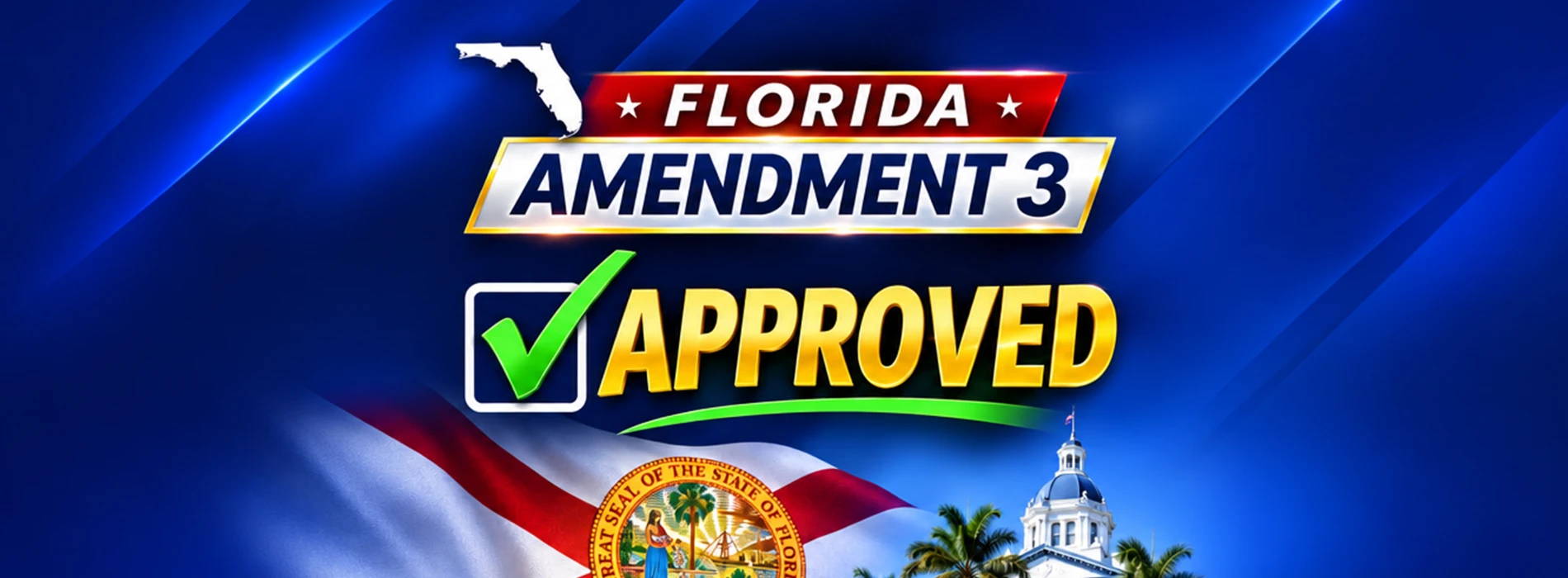
Big news for Florida homeowners! On November 3, 2026, Florida voters approved Amendment 3, the "Save Our Homes from Excessive Property Taxes" amendment. It passed with roughly 62% of the vote, clearing the 60% threshold required to change the Florida Constitution. Amendments 1 and 2 on the same ballot did not pass.
This is one of the biggest changes to Florida property taxes in decades, and it affects nearly everyone who owns, or plans to buy, a home in Southwest Florida. Here's a plain-English breakdown of what changed, who benefits, and what you should do next.
The Quick Summary
- Homestead exemption rises to $150,000 in 2027 and $250,000 starting in 2028 (applies to county, city and special-district taxes).
- Inflation adjustments to that exemption begin in 2029.
- School taxes are not affected. The $25,000 school-tax exemption stays the same.
- New Florida residents wait. Anyone who was not a permanent Florida resident as of December 31, 2026 starts with a $50,000 exemption and steps up to the full amount in their fifth year.
- Second homes, rentals and commercial property get a lower cap on annual assessment increases: 5%, down from 10%.
- Save Our Homes and portability are unchanged. Homesteaded properties keep the 3% (or CPI, whichever is lower) annual assessment cap.
- Takes effect January 1, 2027. The first tax bills reflecting the change arrive in fall 2027.
How the Homestead Exemption Worked Before
Until now, Florida homeowners got roughly a $50,000 homestead exemption, built in two pieces. The first $25,000 of assessed value was exempt from all property taxes, including school taxes. A second exemption of about $25,000 applied to assessed value between $50,000 and $75,000, and only against non-school taxes. Everything above that was fully taxable.
How It Works Now Under Amendment 3
Starting in 2027, a homestead gets two separate exemptions:
What Could That Look Like? A Simple Example
Let's say you own a homesteaded home in Punta Gorda with an assessed value of $400,000. (These numbers are for illustration only; your actual savings depend on your assessed value and your local millage rates.)
- Before: About $350,000 of your value was taxable for non-school taxes.
- 2027: About $250,000 is taxable for non-school taxes.
- 2028: About $150,000 is taxable for non-school taxes.
If your combined non-school millage were 10 mills ($10 per $1,000 of taxable value), that's roughly $1,000 in savings in 2027 and roughly $2,000 a year starting in 2028. Your school taxes would stay about the same.
For many homes under the $250,000 assessed-value mark, the county and city portion of the tax bill could nearly disappear.
The December 31, 2026 Deadline: Huge for Buyers Moving to Florida
This is the part of Amendment 3 that every out-of-state buyer needs to know about.
If you were not maintaining a permanent residence in Florida as of December 31, 2026, you will receive a $50,000 non-school exemption (plus the $25,000 school exemption) at first. The full enhanced exemption kicks in during your fifth year of having the exemption.
On the flip side, if you establish permanent Florida residency by December 31, 2026, you can qualify for the larger exemption when you buy your Florida home later, even if that purchase happens in 2027 or beyond.
A few things to keep in mind:
- The amendment ties the rule to whether you maintained a permanent Florida residence on that date, not simply whether you owned property here.
- The Florida Legislature still has to pass the laws spelling out exactly how this rule will be administered.
- Starting in 2030, a county or city can shorten the five-year wait by a two-thirds vote of its governing body.
If you've been thinking about making Southwest Florida your permanent home, the calendar matters this year. Talk to a Florida real estate attorney or tax professional about what establishing residency looks like for your situation, and reach out to us so we can help you plan your move.
Good News for Second Homes, Vacation Homes and Investment Properties
Amendment 3 isn't just for full-time residents. If you own a vacation home, seasonal residence, rental property or commercial property, the cap on how much your assessed value can rise each year drops from 10% to 5%, starting January 1, 2027. That cap applies to non-school taxes.
For snowbirds and investors buying in places like Cape Coral, Fort Myers Beach, Punta Gorda Isles and Babcock Ranch, that means more predictable carrying costs year over year.
What About Local Services?
Amendment 3 also limits what counties and cities can spend property-tax revenue on, focusing it on core services like public safety, schools, infrastructure, flood control and natural-resource projects. Legislative staff estimated the drop in local non-school property-tax revenue at roughly $5 billion in the 2027–28 fiscal year and nearly $9 billion the following year.
Supporters see this as long-overdue relief for homeowners after years of rising valuations. Opponents, including many local governments, have raised concerns about how cities and counties will fund services. It's worth watching how Charlotte and Lee counties, and cities like Punta Gorda, Cape Coral and Fort Myers, adjust their budgets and millage rates over the next couple of years.
What Current Homeowners Need to Do
For most current homesteaded owners, the answer is: probably nothing. Your homestead exemption generally renews automatically each year, and the new amounts will be applied when your 2027 bill is calculated.
That said, keep an eye out for any notices from your county property appraiser, and double-check that your homestead exemption is on file and current.
What New Buyers Need to Do
- Own and occupy your home as your permanent residence as of January 1 of the tax year.
- Apply for homestead with your county property appraiser by March 1.
- If you're relocating, pay close attention to the December 31, 2026 residency date.
- If you're selling and buying again in Florida, remember that Save Our Homes portability still lets you carry your accumulated savings to your next homestead.
What This Means for the Southwest Florida Real Estate Market
Lower property taxes reduce the true monthly cost of owning a home. That can make homeownership more affordable for retirees on fixed incomes, families moving up, and buyers comparing Florida to higher-tax states. Golf communities like Heritage Landing, new construction neighborhoods like Willow and Turnleaf, and waterfront homes across Punta Gorda and Cape Coral may all look even more attractive when you factor in a smaller tax bill.
When we help clients compare homes, we always look at the full cost of ownership: taxes, insurance, HOA or CDD fees and more. Amendment 3 changes that math in a big way, and we're happy to run the numbers with you.
Have Questions? Reach out to us anytime
Whether you're a longtime Florida homeowner, a snowbird thinking about going full-time, or a buyer planning your move to Southwest Florida, we'd love to help you understand what Amendment 3 means for you.
Disclaimer: This article is for general informational purposes only and is not legal or tax advice. Election results were unofficial at the time of writing, pending state certification, and the Florida Legislature has not yet passed all of the implementing laws. Tax savings examples are illustrative. Please consult your county property appraiser, a licensed Florida attorney, or a tax professional about your specific situation.
Categories
Recent Posts




Get More Information